
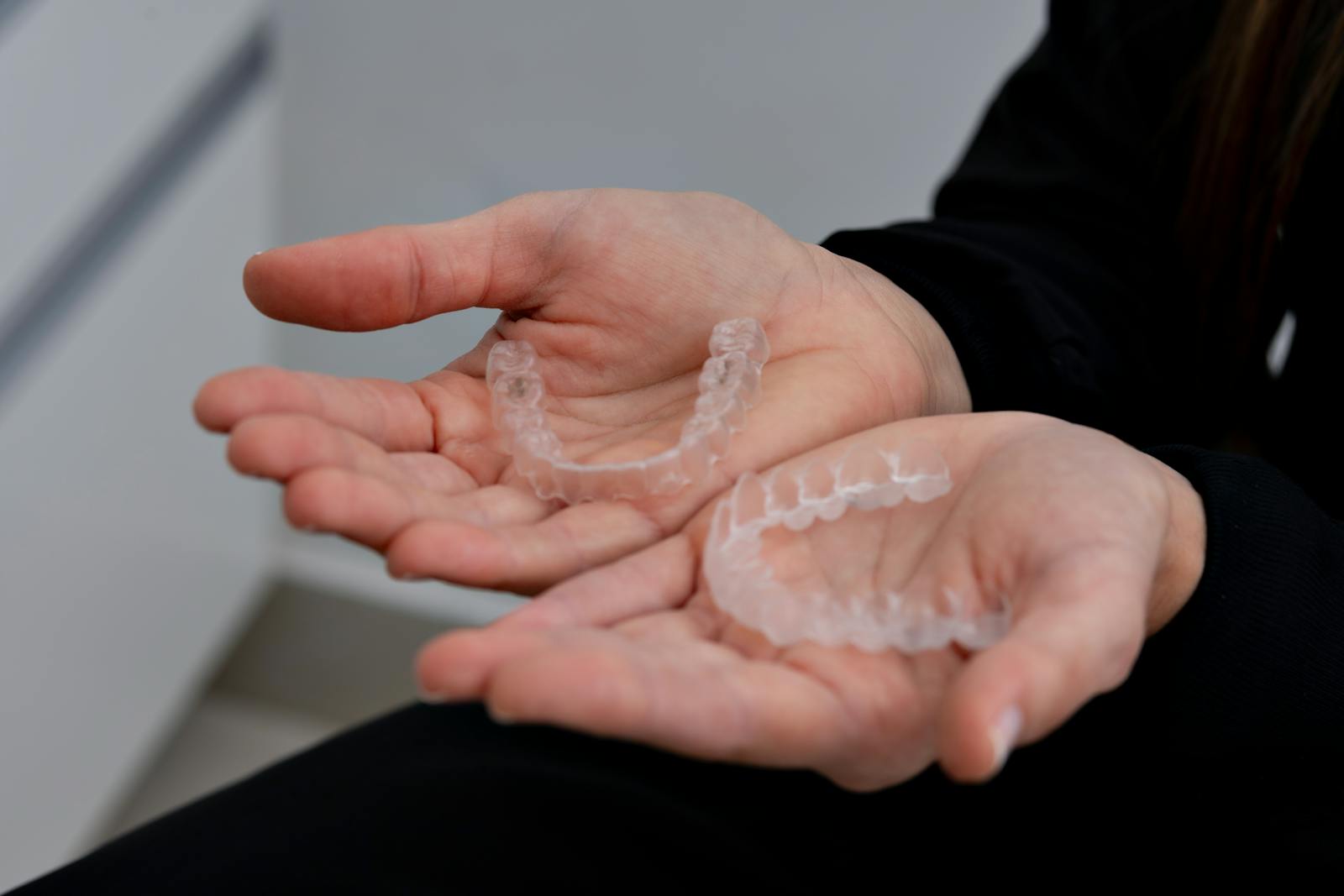
TRIOS 5 Invisalign Submission: A Complete Guide to Digital Orthodontic Workflow 2026
In recent years, digital dentistry has transformed orthodontic treatment planning — and at the center of this evolution is the ability to scan and submit accurate digital impressions directly to aligner manufacturers. One key innovation in this space is the 3Shape TRIOS 5 intraoral scanner, which supports accurate digital impressions and, in many regions, enables Invisalign case submissions without traditional physical impressions. This article provides a deep dive into TRIOS 5 Invisalign submission — what it means, how it works, its benefits, challenges, step‑by‑step workflow, practitioner insights, and answers to common questions.
Table of Contents
- Introduction to TRIOS 5
- What is Invisalign Submission?
- How TRIOS 5 Enables Invisalign Case Submission
- Step‑by‑Step Workflow for TRIOS 5 Invisalign Submission
- Benefits of Using TRIOS 5 for Invisalign
- Technical Requirements and Software Integration
- Common Challenges and Troubleshooting
- Global Acceptance and Limitations
- Best Practices for Successful Submissions
- Frequently Asked Questions (FAQ)
- Conclusion
1. Introduction to TRIOS 5
The 3Shape TRIOS 5 is a next‑generation intraoral scanner widely used in dental practices for capturing precise digital impressions. With ergonomic design, wireless functionality, and advanced scanning technology, TRIOS 5 enhances both clinician workflow and patient experience. (3Shape)
What is TRIOS 5?
TRIOS 5 represents the fifth TRIOS 5 Invisalign Submission generation of 3Shape’s intraoral scanning lineup. It delivers:
- High‑resolution 3D scans of dental arches
- AI‑assisted ScanAssist to improve alignment and stitching
- Wireless convenience for clinical flexibility
- Real‑time color visualization of teeth and soft tissues
- Hygienic design with disposable or autoclavable tips
- Seamless integration with cloud‑based workflows like 3Shape Unite. (3Shape)
These characteristics make TRIOS 5 powerful for prosthetic, implant, orthodontic, and aligner workflows alike.
2. What is TRIOS 5 Invisalign Submission
Before digital impressions became mainstream, orthodontists used polyvinyl siloxane (PVS) physical impressions to produce plaster models for aligner systems like Invisalign. With shifts in digital technology, systems like iTero and — in certain regions and contexts — TRIOS now allow direct digital submissions in lieu of physical PVS impressions. (3Shape)
Invisalign Submission Defined
An Invisalign submission refers to the structured process of sending digital impressions and treatment information to Align Technology’s Invisalign system for treatment planning (ClinCheck) and fabrication of custom clear aligners.
This requires:
- A compatible scanner
- Software that formats and transmits data properly
- Completion of a prescription form
- Integration with the Invisalign provider portal (Invisalign Doctor Site)
In many cases the scan must meet quality and format standards set by Align Technology.
3. How TRIOS 5 Enables Invisalign Case Submission
Historically, 3Shape’s TRIOS TRIOS 5 Invisalign Submission scanners — including earlier models like Standard, Color, and TRIOS 3 — were validated for Invisalign case submissions in partnership with Align Technology. (3Shape)
TRIOS and Invisalign Integration
In 2016, 3Shape and Align Technology announced that TRIOS scanners could be used for Invisalign case submissions once software and validation requirements were met. This allowed TRIOS users to submit full‑arch digital scans instead of traditional physical molds. (3Shape)
With TRIOS 5:
- Scans can be exported in standard formats (typically STL or proprietary cloud workflows)
- Integration with 3Shape Communicate and Invisalign provider portals facilitates seamless transmission
- Mandatory online training and certification is often required for Invisalign submissions (depending on region and platform policies). (learn.3shape.com)
In practice, this means TRIOS 5 users can digitize a patient’s entire dentition and send it electronically as part of the Invisalign prescription, minimizing errors and simplifying the clinical workflow.
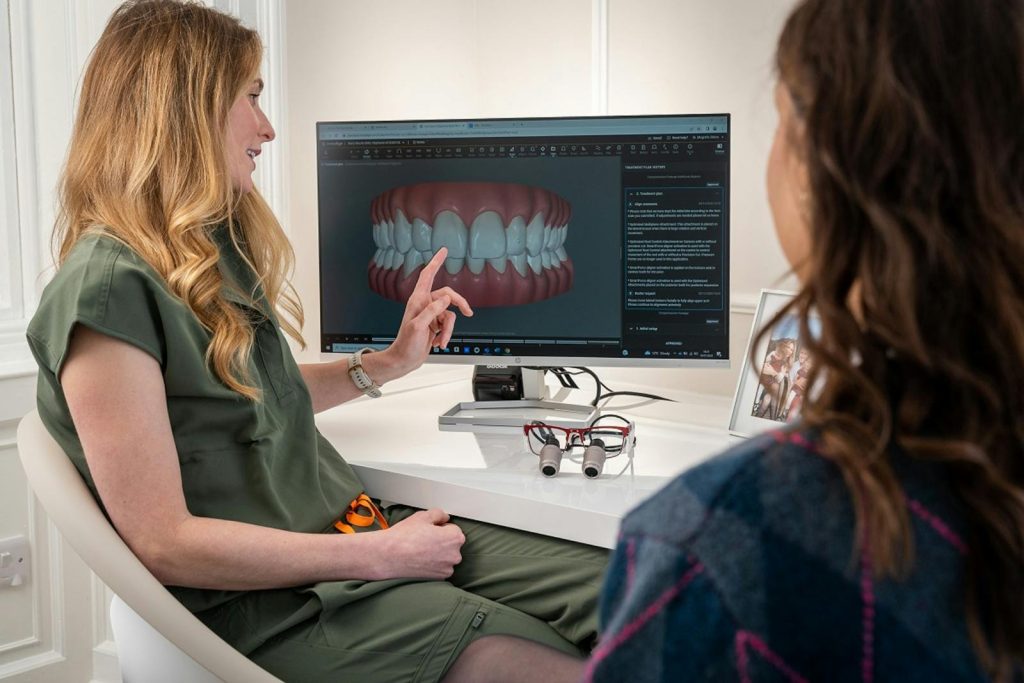
4. Step‑by‑Step Workflow for TRIOS 5 Invisalign Submission
Below is a typical TRIOS 5 Invisalign Submission workflow when submitting Invisalign cases using TRIOS 5:
Step 1: Prepare the Scanner
- Turn on the TRIOS 5 scanner and ensure it is charged.
- Attach a new sterile tip.
- Launch the 3Shape software and verify you are logged into the 3Shape Unite/Communicate system. (3Shape)
Step 2: Capture the Scan
- Select the appropriate scan protocol (full‑arch position).
- Guide the scanner around the upper and lower dental arches.
- Ensure proper capture of occlusion (bite registration) and soft tissue.
- Use visual feedback indicators and ScanAssist alignment aids to achieve a complete scan.
- Validate that the scan is free of voids or major artifact gaps before proceeding. (3Shape)
Tip: Accurate occlusal captures improve aligner fit and ClinCheck accuracy.
Step 3: Review and Edit the Digital Impression
- Inspect the scanned 3D model in the software environment.
- Remove any nonsensical data or incomplete areas using trimming tools.
- Ensure that all relevant surfaces are well represented (especially interproximal areas).
- Confirm that no scan artifacts interfere with the eventual aligner design.
Step 4: Integrate with Invisalign Provider Portal
- Navigate to 3Shape Communicate or the integrated Invisalign workflow module.
- Choose the Invisalign order form as the receiver.
- Ensure the case type is set appropriately (e.g., “Scan Only” for digital submissions).
- Complete the treatment prescription form, including details like patient profile, photos, and clinical goals. (learn.3shape.com)
Step 5: Transmit the Case
- Confirm integration with the Invisalign Doctor Site is enabled.
- Send the case; uploads typically take a few minutes depending on connection speed and file size.
- Verify that the case appears in the Invisalign portal within the expected timeframe (up to 40–45 minutes in some workflows). (learn.3shape.com)
Step 6: Review Invisalign Response
- Align Technology TRIOS 5 Invisalign Submission processes the case and generates a ClinCheck treatment plan.
- Review the proposal, request adjustments if necessary, and approve production.
- Receive aligner trays and finalize treatment scheduling.
5. Benefits of Using TRIOS 5 for Invisalign
Using a digital TRIOS 5 Invisalign Submission workflow with TRIOS 5 for Invisalign submissions provides several clinical and operational advantages:
a. Higher Digital Accuracy
Digital TRIOS 5 Invisalign Submission impressions with TRIOS 5 produce precise 3D models, often with less distortion than traditional PVS molds. (3Shape)
b. Improved Patient Comfort
Scanning eliminates the need for bulky trays and impression materials, making the experience more comfortable — especially for gag‑reflex‑sensitive patients.
c. Faster Turnaround
Once a scan is submitted digitally, it accelerates the communication timeline between practice and Invisalign processing, potentially reducing overall treatment time.
d. Efficient Workflow
Cloud‑based integration via 3Shape Unite and Communicate means scans can be accessed by labs, specialists, and treatment planners quickly and securely. (3Shape)
e. Reduced Errors
Digital tools allow real‑time feedback and correction of scans, minimizing the risk of inaccuracies that can lead to retakes or misfit aligners.
6. Technical Requirements and Software Integration
To successfully submit Invisalign cases with TRIOS 5, certain technical preconditions must be met:
1. Ethical and Regulatory Compliance
- The clinician must be an official Invisalign provider with an active account.
- Some platforms require specific training and certification for Invisalign submissions. (learn.3shape.com)
2. Software Version and Integration
- TRIOS software must support export formats compatible with the Invisalign workflow (STL or cloud‑based transmission).
- Integration with 3Shape Communicate TRIOS 5 Invisalign Submission and Invisalign provider portals is required.
3. Patient Data Security
- Comply with data protection TRIOS 5 Invisalign Submission regulations, especially when transmitting patient scans over cloud services.
7. Common Challenges and Troubleshooting
Despite the benefits, some practices encounter challenges:
1. Case Does Not Appear on Invisalign Site
If the case does not show up:
- Confirm that the Invisalign channel is correctly selected in Communicate.
- Ensure that the case is flagged appropriately (e.g., “Scan Only”).
- Re‑verify integration credentials if login or authorization has changed. (learn.3shape.com)
2. Integration Issues
Sometimes account credentials TRIOS 5 Invisalign Submission or integration configurations can prevent successful transmission. Re‑integrating accounts through 3Shape Communicate settings often resolves this.
3. Scan Quality Problems
Incomplete scans, missing TRIOS 5 Invisalign Submission occlusal data, or excessive noise artifacts can lead to rejection by Invisalign systems — reinforcing the need for meticulous scanning technique.
4. Regional Acceptance Variations
In some geographic regions or according to specific policies, Invisalign may only accept scans from certain scanners or strictly require physical models. It’s essential to confirm localized regulatory acceptance.
8. Global Acceptance and Limitations
While the partnership between Align Technology and 3Shape enables Invisalign submissions with TRIOS scanners, acceptance rules vary:
- Invisalign’s policies may differ by country and update over time.
- Some providers report that operational restrictions still exist in specific markets or for certain aligner types.
- In some regions, scanners like iTero are the default or mandatory choice for Invisalign scanning workflows, while TRIOS validity is recognized only in designated contexts.
Practitioners should consult the latest documentation from Align and 3Shape for current country‑specific policies. (learn.3shape.com)
9. Best Practices for Successful Submissions
Here are expert tips to streamline your TRIOS 5 Invisalign submissions:
- Complete proper Invisalign training through official 3Shape and Align Technology courses. (learn.3shape.com)
- Use occlusal and margin markers while scanning to enhance accuracy.
- Verify connectivity and credentials before scanning sessions.
- Always review and clean the scan prior to submission.
- Plan for secure, high‑speed internet to speed up file transfer.
10. Frequently Asked Questions (FAQ)
Q1: Can TRIOS 5 send scans directly to Invisalign?
A: Yes — when integrated and properly configured, TRIOS 5 can send full‑arch digital impressions to the Invisalign system for case submission. However, this often requires account integration and training. (learn.3shape.com)
Q2: Is Invisalign acceptance universal for all TRIOS models?
A: Historically, several TRIOS 5 Invisalign Submission TRIOS models (Standard, Color, TRIOS 3) gained interoperability for Invisalign case submissions. Acceptance policies may differ by region. (3Shape)
Q3: Do I still need traditional impressions?
A: With digital scanning workflows, physical PVS impressions are less common, though some practices still use them if digital submission is not possible in a given situation.
Q4: How long does it take for a scan to appear in the Invisalign portal?
A: Typically within 30–45 minutes after successful transmission via an integrated workflow. (learn.3shape.com)
Q5: What if my scan doesn’t appear in the Invisalign Doctor Site?
A: Check integration settings, TRIOS 5 Invisalign Submission ensure the case was sent to the correct receiver, and re‑try submission if needed. (learn.3shape.com)
Q6: Does Invisalign require certification for TRIOS?
A: Many regions and workflows require completion of official training and demonstration of competency before submitting cases. (learn.3shape.com)
Q7: Can patients view their scans in 3Shape software?
A: Yes — TRIOS imaging interfaces allow practitioners to show patients their scans for improved communication, which is valuable in Invisalign consultations. (3Shape)
Q8: Is cloud storage necessary?
A: Cloud‑based storage and communication (via 3Shape Unite and Communicate) simplifies case management and submission interoperability. (3Shape)

11. Conclusion
The convergence of digital scanning and aligner workflows marks a pivotal advancement in modern orthodontics. With tools like 3Shape TRIOS 5, clinicians can capture high‑fidelity digital impressions, improve patient comfort, and enable streamlined workflows for treatments like Invisalign — replacing messy physical impressions and reducing clinical errors. (3Shape)
However, fully realizing this potential requires understanding the technologies, meeting technical prerequisites, completing mandatory training, and navigating platform integrations. When implemented effectively, TRIOS 5 Invisalign submissions offer faster turnaround, better accuracy, and enhanced patient engagement — making them a powerful asset in the digital practice of orthodontics.
ALSO READ MORE Twinkle Light Pumpkins: A Complete Guide to Glowing Autumn Decor 2026