How to Store Knock Off Designer Bags So They Don’t Lose Shape or Finish
Most damage to knock off designer bags doesn’t happen while they’re being worn. It happens quietly, over time, when they’re stored incorrectly. Creases that never smooth out, sagging handles, warped bases, and cracked edges are usually the result of poor storage habits rather than low-quality construction.
Designer imitation purses are built to resemble originals not just visually, but structurally. That means they respond to gravity, pressure, humidity, and friction in very similar ways. Storing them properly is less about special products and more about understanding how materials behave when left alone for long periods.
Why Storage Matters More Than Daily Use
Daily use causes predictable wear. Storage causes slow deformation.
When a bag sits for weeks or months, weight distribution becomes the dominant factor. Handles pull against attachment points. Structured bases flatten or bow. Soft leather collapses inward. Over time, these changes become permanent.
This is especially true for knock off handbags made with coated canvas or reinforced leather panels. These materials are durable, but they retain the shape they’re forced into. Poor storage trains the bag into the wrong form.
Choosing the Right Storage Environment
Environment is the foundation of proper storage.
Bags should be stored in a space with stable temperature and moderate humidity. Excess moisture softens adhesives and weakens edge paint. Dry air pulls oils from leather, leading to stiffness and cracking. Direct sunlight fades coated canvas and discolors leather unevenly.
Closets are ideal if airflow exists. Basements and attics are not. If the air feels uncomfortable for you long-term, it’s not ideal for a handbag either.
How to Support Shape Without Overstuffing
Stuffing is helpful, but only when done correctly.
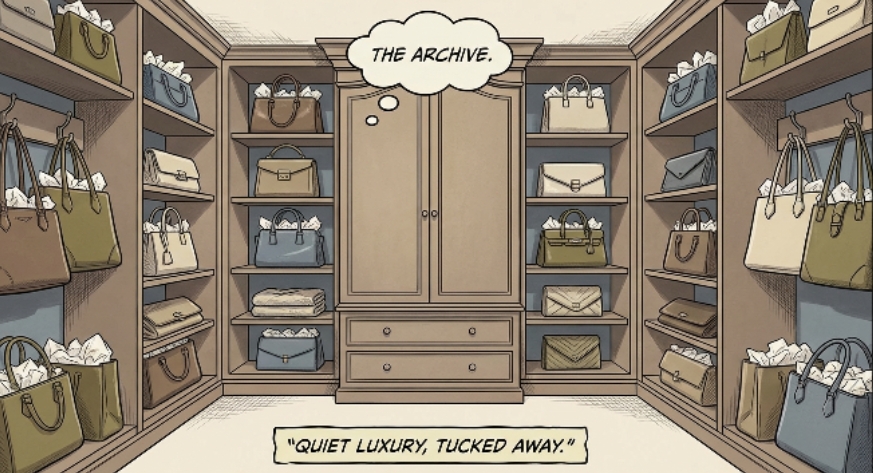
The goal is to support structure, not stretch it. Soft materials like acid-free tissue paper or clean cotton fabric work best. They conform to interior curves without pushing outward.
Avoid newspapers, colored paper, or rigid fillers. Ink can transfer, and hard materials distort seams. Overstuffing is just as harmful as under-stuffing, especially around corners and zipper lines.
Structured knock off designer purses benefit most from light internal support that keeps panels upright without forcing expansion.
Handle and Strap Positioning Matters
Handles and straps are under constant tension when stored incorrectly.
Never hang bags by their handles for long periods. Gravity pulls hardware and stitching downward, creating permanent sag. Chain straps resting directly on leather cause indentations and surface wear.
When storing flat, place straps inside the bag wrapped in soft cloth, or lay them gently across the interior without sharp bends. This preserves shape and prevents pressure marks.
Why Dust Bags Are Helpful (and When They’re Not)
Dust bags protect against light exposure and surface abrasion, but they aren’t airtight shields.
Use breathable fabric dust bags, not plastic. Plastic traps moisture and creates ideal conditions for mildew and odor. If a bag is even slightly damp, sealing it inside plastic accelerates damage.
Dust bags work best when paired with airflow and occasional inspection. Bags stored long-term should be checked periodically to ensure no moisture or deformation is developing.
Stacking Bags Without Crushing Them
Stacking is risky but sometimes unavoidable.
If bags must be stacked, heavier and more structured bags should go on the bottom. Softer or smaller bags go on top. Never compress a soft leather bag under a rigid one.
Use shelf dividers or vertical storage when possible. Standing bags upright with internal support minimizes pressure points and keeps bases aligned.
These principles apply broadly across luxury-inspired handbags and are especially relevant when storing multiple styles from the same category of knockoff designer purses.
Travel Storage: Temporary but Critical
Travel introduces unique risks.
Packing bags inside luggage without protection causes compression, abrasion, and hardware damage. Bags should be stuffed lightly, wrapped in soft fabric, and placed where they won’t bear weight.
Upon returning, bags should be unpacked immediately. Leaving them compressed for days after travel sets unwanted creases and shape changes that are difficult to reverse.
How Buyers Decide Which Storage Practices Actually Work
Experienced buyers evaluate storage methods the same way they evaluate bags themselves: by long-term results.
Practices that preserve shape, prevent edge cracking, and maintain surface finish over months and years are what matter. Advice that focuses on quick fixes or cosmetic shortcuts usually fails over time.
Readers who want a broader look at how different stores and sellers approach quality and long-term durability often explore comparisons on where to buy replica bags, especially when trying to understand which sources prioritize construction that responds well to proper care.
The Takeaway
Proper storage isn’t complicated, but it is deliberate.
Knock off designer bags last longer when supported correctly, protected from extreme environments, and handled with an understanding of how materials behave under time and pressure. Small habits, repeated consistently, make a visible difference.
A well-made bag stored poorly will age faster than an average bag stored correctly. Storage is not an afterthought. It’s part of ownership.
About the Author
Ari Erhart is known for his deep expertise in replica fashion, including handbags, watches, and luxury-inspired footwear. With direct exposure to factory operations, materials sourcing, and quality control practices, he offers an informed perspective on how replicas are constructed and evaluated over time. His work emphasizes education, transparency, and helping buyers make better long-term decisions in a complex market.